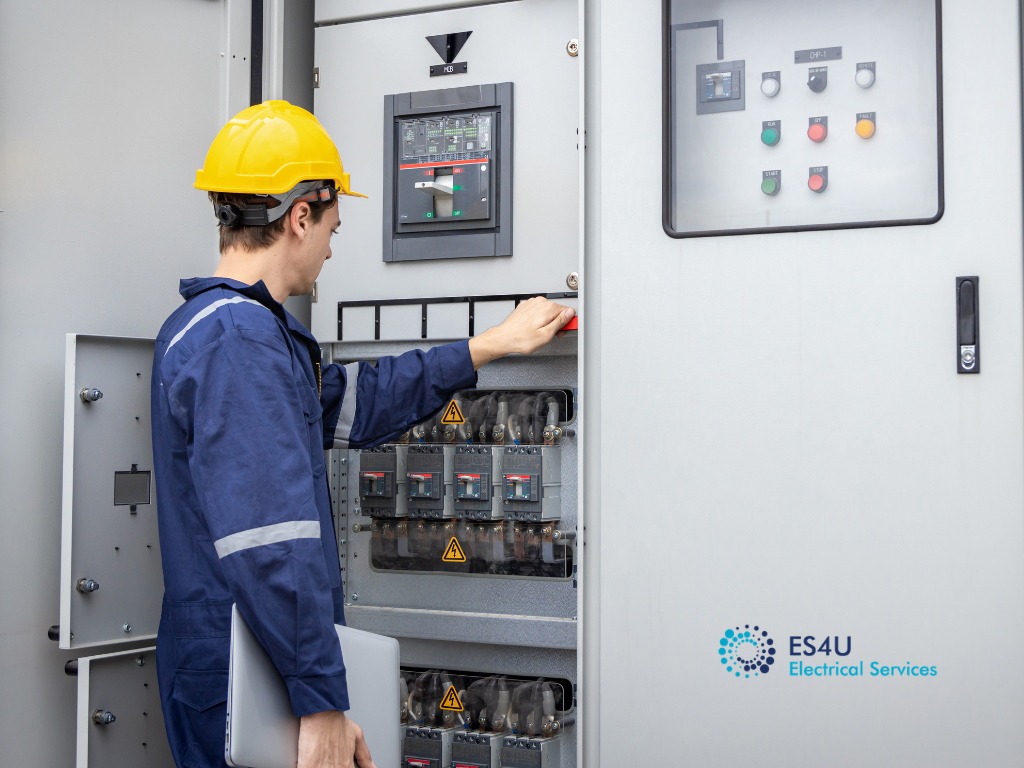
When comparing commercial electrical services Sydney businesses often have questions about safety switches, also known as residual current devices or RCDs. They are an important part of electrical risk management because they are designed to disconnect the electricity supply when potentially harmful leakage current is detected. However, safety switches are not the same as circuit breakers, and the requirements for workplaces depend on how electrical equipment is used and the risks present at the site.
For Sydney businesses, the practical issue is not simply whether a switchboard contains an RCD. Businesses also need to consider whether the correct circuits and equipment have suitable protection, whether the devices are being tested, and whether changes to the workplace have created new electrical risks. SafeWork NSW requires businesses to manage electrical risks and states that workplace RCDs must be maintained so they remain effective and tested regularly.
Commercial Electrical Services Sydney: How an RCD Protects People
A key reason businesses seek commercial electrical services Sydney support is to understand what protection already exists within their electrical system.
An RCD continuously monitors the flow of electricity through a circuit. If it detects electricity leaking to earth at a potentially harmful level, it is designed to switch off the supply quickly. SafeWork NSW describes RCDs as devices that provide a high level of personal protection against electric shock and notes that properly installed and maintained RCDs can help prevent workplace injuries and fatalities.
This protection becomes particularly important where workers use portable electrical equipment or operate equipment in environments where moisture, heat, vibration, mechanical damage, chemicals or dust may increase electrical risk.
A safety switch does not make unsafe equipment safe. Damaged electrical equipment should still be removed from service and assessed rather than continuing to be used simply because RCD protection is present.
Commercial Electrical Services Sydney: RCDs and Circuit Breakers
When discussing commercial electrical services Sydney, it is useful to understand that an RCD and a circuit breaker perform different jobs.
An RCD is primarily intended to reduce the risk of electric shock by detecting leakage current. A circuit breaker is designed to protect electrical wiring and circuits against conditions such as excessive current caused by overloads or short circuits.
A commercial switchboard may contain both forms of protection, and some modern devices combine functions. The important point for a business owner or facility manager is not to assume that the presence of circuit breakers means all relevant circuits have RCD protection.
A licensed electrician can inspect the switchboard, identify the protective devices installed and explain how the existing system relates to the way the premises are being used.
Commercial Electrical Services Sydney: Where RCDs May Be Required
Commercial Electrical Services Sydney: Higher-Risk Workplace Equipment
Businesses arranging commercial electrical services Sydney should understand that workplace RCD requirements are linked closely to electrical risk.
SafeWork NSW states that RCD requirements apply to plug-in electrical equipment used in certain higher-risk conditions. These include environments where equipment may be damaged by moisture, heat, vibration, mechanical impact, corrosive chemicals or dust. Requirements can also apply where electrical equipment is frequently moved or transported between locations in circumstances where damage is reasonably likely.
This can be relevant to workplaces such as commercial kitchens, manufacturing environments, workshops, outdoor work areas and other sites where equipment is exposed to harsher conditions than a typical office appliance.
The exact requirements can vary according to the installation, equipment and working environment. This is why businesses should avoid applying a one-size-fits-all interpretation to safety-switch requirements.
Commercial Electrical Services Sydney: Checking Existing Protection
Commercial electrical services Sydney can also help businesses understand whether older premises still suit current operating needs.
A commercial building may have changed considerably since its electrical installation was first designed. New tenants may have added equipment, office layouts may have changed, machinery may have been installed and additional circuits may have been introduced over time.
An electrical assessment can identify which circuits currently have RCD protection and whether any parts of the installation need further investigation.
This can be particularly useful when moving into an existing tenancy or planning a refurbishment. Rather than assuming the previous electrical arrangement remains suitable, businesses can have the current installation assessed against the actual way the workplace will be used.
Commercial Electrical Services Sydney: Testing Safety Switches
Commercial Electrical Services Sydney: Why RCD Testing Matters
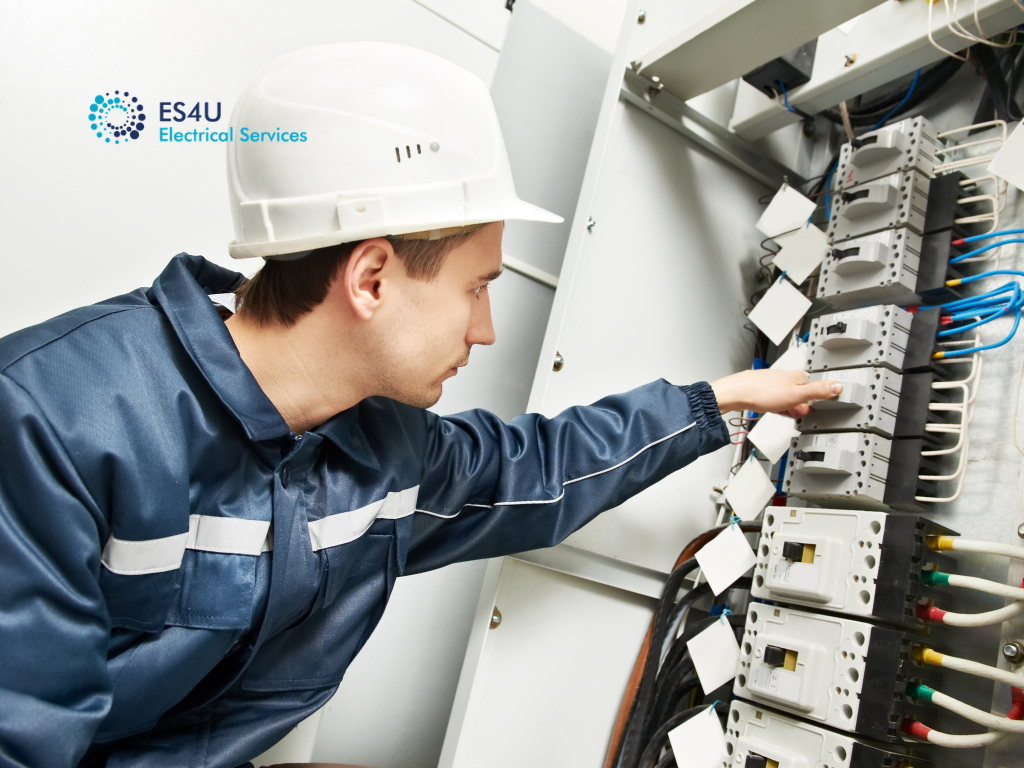
Regular testing should form part of commercial electrical services Sydney maintenance planning where RCDs are used in a workplace.
SafeWork NSW states that a person with management or control of a workplace must take reasonable steps to ensure workplace RCDs are regularly tested by a competent person so the devices remain effective. This applies to portable and non-portable RCDs where relevant.
There is not one universal testing interval that can simply be applied to every commercial site. Requirements can depend on the type of workplace, the equipment involved and relevant Australian Standards.
Construction and demolition sites, for example, have their own electrical inspection and testing requirements under AS/NUS 3012. Other workplace equipment may fall under AS/NUS 3760 and applicable workplace safety requirements.
For businesses, the practical approach is to establish a testing schedule that suits the site rather than waiting until a safety switch fails or begins tripping unexpectedly.
Commercial Electrical Services Sydney: Test Buttons and Competent Testing
A commercial electrical services Sydney provider can also explain the difference between pressing an RCD test button and formal electrical testing.
The test button provides a simple way of checking whether the mechanism operates, but it should not be treated as a substitute for testing required under workplace safety obligations.
SafeWork NSW states that workplace RCD testing must be carried out regularly by a competent person. Records of testing, other than daily push-button tests, must be retained until the RCD is next tested or disposed of.
The person performing formal testing needs the appropriate knowledge, skills and testing equipment for the work involved.
Businesses should therefore know who is responsible for testing, when it was last completed and when the next check is due rather than relying solely on occasional manual testing.
Commercial Electrical Services Sydney: Warning Signs to Investigate
Commercial Electrical Services Sydney: Repeated RCD Tripping
One reason businesses call commercial electrical services Sydney providers is because an RCD or circuit breaker repeatedly trips.
Repeated tripping should not simply be treated as an inconvenience. SafeWork NSW specifically recommends determining why an RCD, circuit breaker or other protective device disconnected the electricity before switching it back on.
The cause may involve faulty equipment, damaged wiring, moisture, an issue with a connected appliance or another electrical fault. The exact cause needs to be diagnosed rather than guessed.
If the device continues to trip, repeatedly resetting it without investigating the cause can leave the underlying problem unresolved.
A commercial electrician can isolate circuits, test equipment and work through the electrical system methodically to identify the source of the fault.
Commercial Electrical Services Sydney: Older Switchboard Concerns
Commercial electrical services Sydney may also be needed when the switchboard itself no longer reflects the needs of the business.
Commercial properties often change over time. Businesses add equipment, computers, air conditioning, kitchen appliances, machinery, lighting and other electrical loads. A switchboard originally designed for a different use may need to be reviewed as those requirements change.
Signs such as unexplained tripping, heat damage, deterioration or unclear circuit identification warrant professional attention. Businesses planning major equipment additions should also consider whether the existing distribution system has sufficient capacity before installation begins.
ES4U’s current commercial service information includes switchboard installation and labelling, as well as electrical design, construction and fault-finding services. This is the type of broader capability that can be useful when the issue involves more than replacing an individual safety switch.
Commercial Electrical Services Sydney: New Work and Fit-Outs
Commercial Electrical Services Sydney: RCDs in New Installations
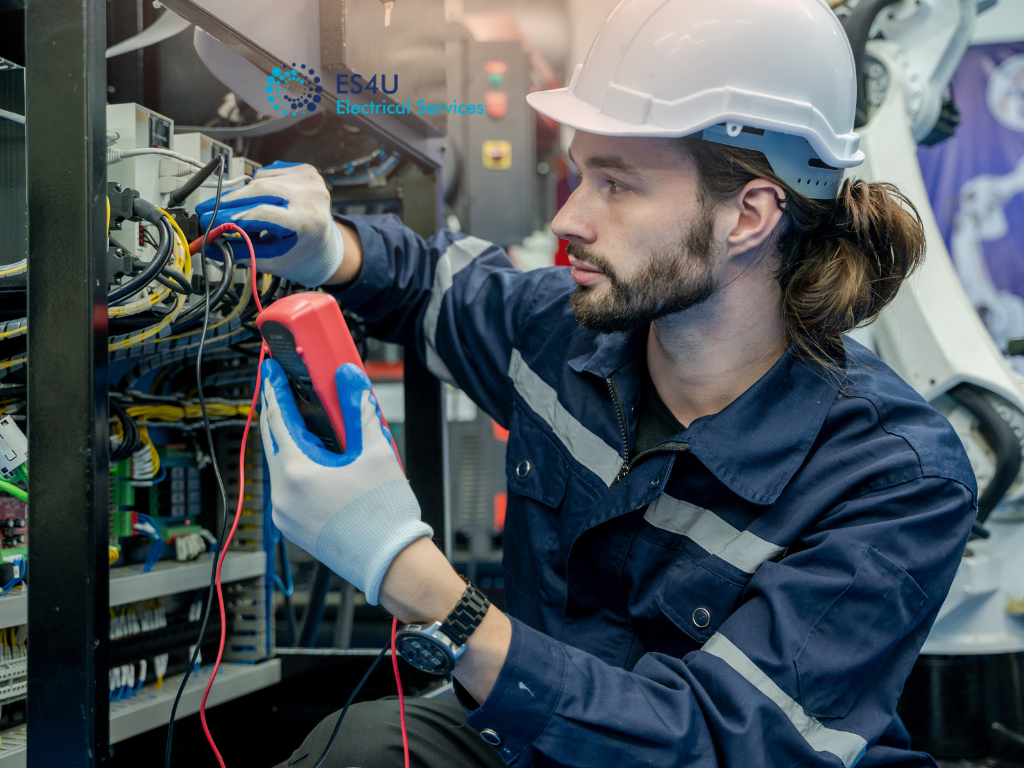
A new fit-out is an opportunity to consider safety switches as part of the wider commercial electrical services Sydney design rather than as an afterthought.
A commercial electrical installation may involve new power points, lighting, dedicated circuits, switchboard changes, data systems and equipment connections. The protection required should be planned alongside these changes.
In NSW, electrical wiring work must be performed by a person holding the appropriate electrical licence or certificate, regardless of whether the work is residential, commercial or industrial.
For a Sydney office, retail space, commercial kitchen, warehouse or education facility, the electrician should understand what equipment will be used, how the space will operate and what electrical risks need to be managed.
This helps ensure the protection strategy reflects the actual workplace rather than simply repeating the arrangement used by the previous tenant.
Commercial Electrical Services Sydney: Planning for Additional Equipment
Commercial electrical services Sydney should also consider future electrical demand when businesses introduce new equipment.
Adding machinery, refrigeration, commercial kitchen equipment, EV charging, air conditioning or other significant loads can change the way power is distributed across a site.
The project may require additional circuits, switchboard work or changes to electrical protection. It is better to assess these requirements before equipment is installed rather than discovering afterwards that the existing infrastructure is unsuitable.
This is particularly relevant during office fit-outs, new construction and commercial refurbishments where several electrical systems may be changing at the same time.
A clear project scope helps the electrician understand both current requirements and likely future demands.
Commercial Electrical Services Sydney: Ongoing Maintenance
Commercial Electrical Services Sydney: Preventative Electrical Care
Safety switches should form part of broader commercial electrical services Sydney maintenance rather than being treated as isolated devices.
SafeWork NSW recommends appropriate preventative maintenance for workplace electrical equipment, including visual inspection and testing where necessary. Businesses also have duties to ensure electrical equipment under their management or control is safe to use so far as reasonably practicable.
A commercial electrical maintenance program may therefore consider switchboards, RCDs, outlets, electrical equipment, visible cabling and other parts of the installation according to the needs of the site.
Different commercial environments will require different approaches. An office does not have the same operating conditions as a commercial kitchen, workshop, warehouse or industrial facility.
The maintenance plan should reflect those differences rather than applying an arbitrary schedule to every workplace.
Commercial Electrical Services Sydney: Keeping Useful Testing Records
Documentation is another important part of commercial electrical services Sydney maintenance.
SafeWork NSW requires records of certain workplace electrical equipment testing to include information such as who performed the test, when it was carried out, the outcome and when the next test is due. RCD testing records, other than daily push-button tests, also need to be retained until the device is next tested or disposed of.
Keeping these records organised can make future maintenance easier, particularly when several contractors or facility managers are involved over the life of a building.
It also gives the business a clearer history of what has been inspected, what problems were identified and what work was completed.
Commercial electrical maintenance becomes more useful when each visit contributes to an accurate understanding of the site’s electrical system rather than starting from scratch every time.
Commercial Electrical Services Sydney: Choosing an Electrician
Commercial Electrical Services Sydney: What to Check Before Engaging a Contractor
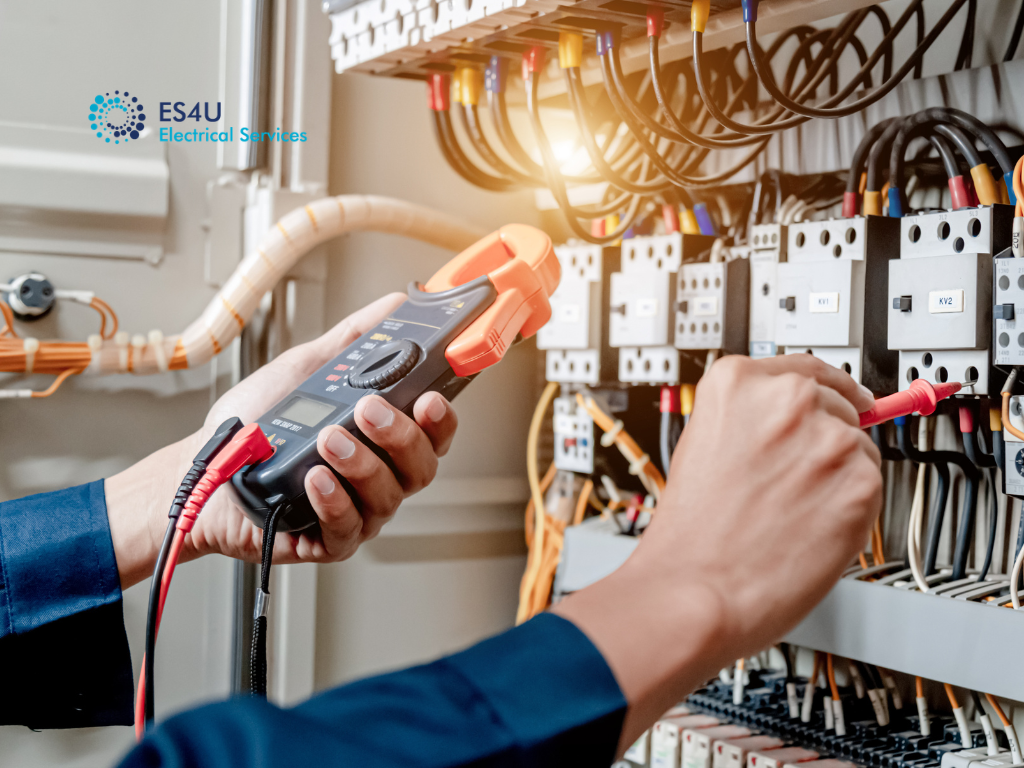
When comparing commercial electrical services Sydney providers, begin with appropriate licensing and relevant commercial experience.
NSW requires an electrical licence or certificate for electrical wiring work regardless of whether the project is residential, commercial or industrial.
Beyond licensing, ask how the contractor approaches RCD assessment, testing, fault finding and documentation. Commercial electrical contractors Sydney businesses consider should be able to explain what they will inspect and why rather than simply recommending equipment without an assessment.
It is also useful to consider whether the contractor understands your type of site. Electrical needs can differ significantly between offices, warehouses, retail premises, schools, commercial kitchens and industrial facilities.
Businesses searching for commercial electricians near me should therefore compare capability and suitability for the project, not proximity alone.
Commercial Electrical Services Sydney: Building Long-Term Support
For businesses that require ongoing commercial electrical services Sydney, it can be useful to work with a contractor capable of supporting maintenance as well as individual installation projects.
ES4U provides commercial electrician services across Sydney and currently lists commercial fit-outs, design and construction, data and communication cabling, switchboard installation and labelling, emergency electrical repairs and fault finding among its commercial capabilities. Its published commercial maintenance information also discusses safety-switch checks as part of broader planned electrical maintenance.
This broader approach can be useful for businesses whose electrical needs continue to change after the initial project is finished.
When comparing commercial electrical companies Sydney businesses should ask who will manage ongoing testing, what records will be provided and how future faults or upgrades will be handled.
Safety switches are only one part of commercial electrical safety, but they are an important one. Understanding where RCD protection applies, testing devices appropriately and responding properly when they trip can help businesses manage electrical risks more effectively.
If you are unsure whether your Sydney workplace has suitable RCD protection, arranging an assessment with a licensed commercial electrician can clarify what is already installed, what testing is due and whether any changes are appropriate for the way your site currently operates.